 Written by
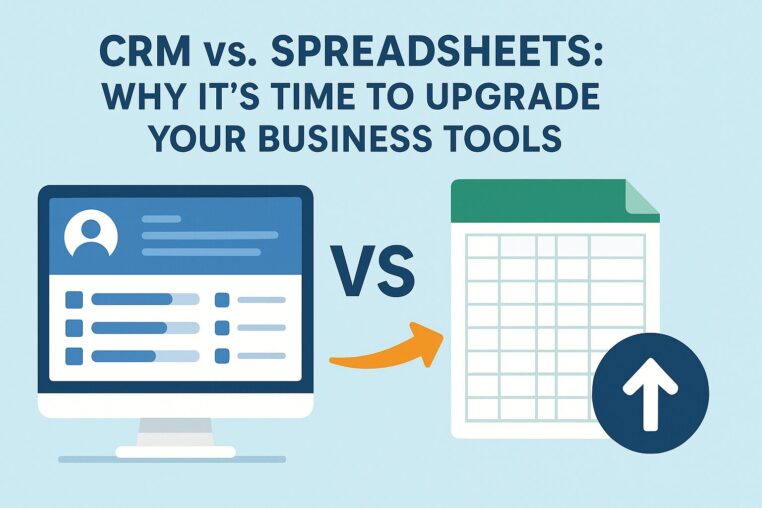
 In the early days of running a business, spreadsheets can seem like the perfect tool. They’re simple, accessible, and cost-effective. However, as your company grows, the limitations quickly become clear. Managing customer relationships, tracking sales, and coordinating tasks demand more than rows and columns. This is where a Customer Relationship Management (CRM) system steps in, offering advanced capabilities that spreadsheets simply can’t match.
Spreadsheets: A Quick Fix That Slows You Down
Spreadsheets work well for basic record-keeping, but they lack the automation and integration needed for modern business operations. Updating customer data manually takes time, and one small error can cause major problems. Additionally, collaboration becomes challenging because team members often work on different versions of the same file, creating confusion and inefficiency.
Moreover, spreadsheets do not provide a clear picture of customer interactions. You might have contact information in one tab, purchase history in another, and follow-up notes somewhere else. This fragmented data makes it difficult to deliver personalized service or track progress effectively.
CRM Systems: Designed for Growth and Efficiency
A CRM centralizes all customer information in one place, making it accessible to everyone on your team in real time. Instead of juggling multiple files, you have a single dashboard that shows every interaction, lead status, and sales opportunity.
Furthermore, CRM software automates repetitive tasks such as sending follow-up emails, scheduling calls, and generating reports. This not only saves time but also ensures that no customer slips through the cracks. By integrating with other tools like email platforms, social media, and project management software, a CRM creates a connected workflow that spreadsheets can’t replicate.
Why the Upgrade Matters
Switching from spreadsheets to a CRM is more than just a technology upgrade—it’s a shift in how you manage relationships and grow your business. Here’s why the change is worth it:
-
Improved Accuracy – Automation reduces human error, ensuring your data stays clean and reliable.
-
Better Collaboration – Teams can access and update information instantly, avoiding version conflicts.
-
Enhanced Customer Experience – With complete profiles and interaction histories, you can personalize every conversation.
-
Scalability – As your business expands, a CRM adapts to handle more leads, clients, and sales processes without slowing down.
-
Actionable Insights – Built-in analytics help you understand trends, measure performance, and make smarter decisions.
Overcoming the Transition Hurdles
Many businesses hesitate to adopt a CRM because they fear the learning curve or the initial setup costs. However, most modern CRM platforms are user-friendly, with intuitive interfaces and onboarding support. The time saved and the productivity gained often outweigh the investment within months.
To make the transition smoother, start by importing your spreadsheet data into the CRM. Then, train your team on how to use the system effectively. Soon, the benefits—faster workflows, better communication, and happier customers—will speak for themselves.
Final Thoughts
While spreadsheets may have helped you get started, they can’t keep up with the demands of a growing business. A CRM gives you the tools to manage relationships, automate processes, and gain valuable insights, all in one place. The upgrade isn’t just about technology; it’s about setting your business up for long-term success.
So, if you’re still relying on spreadsheets to manage customer relationships, now is the perfect time to embrace a CRM and take your business to the next level.



 Written by
 Written by