 Written by
 Your clutch is one of the unsung heroes of your car’s drivetrain. When it starts acting up, you face a decision: repair the clutch or replace it entirely. Which option is cheaper? Which lasts longer? And how do you choose the right one?
We talk about pricing, life expectancy, maintenance advice, and things to look out for when deciding between a clutch repair and a new clutch in this tutorial.
Understanding the Clutch & How It Wears Out
- It’s helpful to grasp how the clutch system works and what can go wrong before you make a decision.
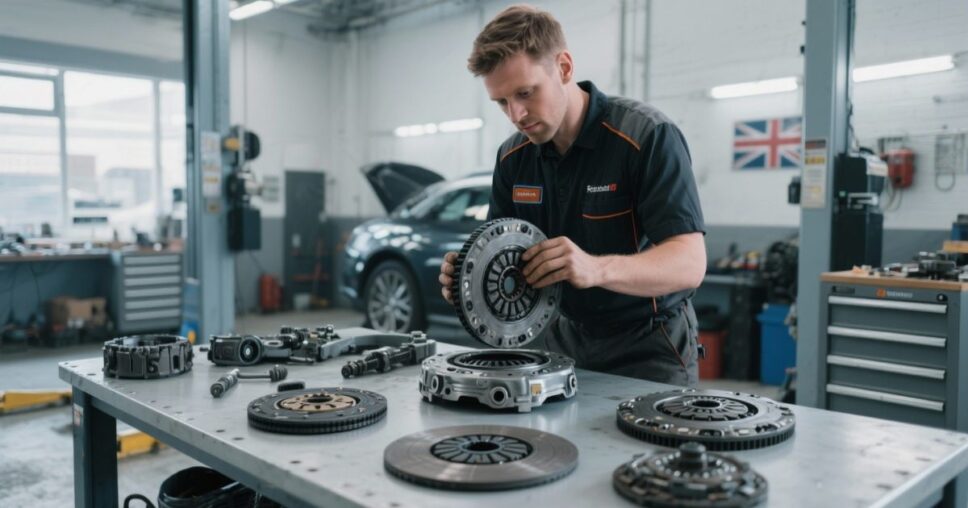
- A typical clutch assembly has a clutch disc (friction plate), a pressure plate, a release bearing, and sometimes a flywheel.
- Over time, friction, heat, and stress from machines wear down the surfaces that provide friction.
- How you drive matters: riding the clutch, shifting too aggressively, driving in stop-and-go traffic a lot, towing, and making bad adjustments all degrade the life of the clutch.
- A car’s clutch can last about 60,000 miles (96,561 km), but some last longer and some last shorter, depending on how they are used.
- If the clutch is only partly broken (for example, the disc is worn but the pressure plate and flywheel are still good), a repair can be enough.
Clutch Repair vs Replacement — What’s the Difference?
Here’s a comparison to help you see which route might make sense:
| Feature | Clutch Repair | Clutch Replacement (New Clutch) |
| Scope | Fixing or replacing one or more worn components (e.g. disc, bearing, cable) | Installing a full clutch kit (disc, pressure plate, and often a new flywheel) |
| Cost | Usually lower, depending on damage extent, labour, and parts | Higher labour plus complete kit and possibly other components |
| Longevity | Moderate might be a stopgap if the system is mostly intact | Long you get a “fresh start” with all major components new |
| Risk | If underlying issues exist (undetected wear elsewhere), repair might fail early | Lower risk if done properly with quality parts |
| Complexity | Less invasive work, depending on which parts | Full removal of transmission, more labour-intensive |
Clutch Repair Cost vs Replacement Cost (UK Estimates)
Clutch Repair Cost
Repair costs depend heavily on which part failed:
- Minor repairs (e.g. replacing a worn bearing or adjusting linkage) may be relatively inexpensive.
- If the flywheel or pressure plate has also sustained damage, repair costs grow.
I found that labour and parts combined for clutch repair can vary a lot depending on vehicle make/model and how accessible the parts are.
Clutch Replacement Cost in the UK
Here are some recent estimates:
- RAC reports that a new clutch in the UK can cost £500 to £1,000, depending on car model and added parts.
- Some sources estimate a clutch replacement between £300 and £900, depending on parts and labour.
- ClickMechanic lists the average replacement around £400 (range £250–£600), though this depends on the model.
- FixMyCar suggests an average cost of £670.82 for UK replacements.
- Labour costs can vary: say £50–£100/hr in big cities like London, while in smaller towns it might be £35–£50/hr.
- The clutch kit itself, which includes the disc, pressure plate, and release bearing, usually costs between £150 and £500, depending on the brand and quality.
If you get quotations that are substantially cheaper than these ranges, make sure to evaluate the quality or any extra fees that may not be obvious.
When Repair Makes Sense (vs Replace)
Sometimes it makes sense to repair something instead of getting a new one:
- Damage is limited: If the release bearing or a small part is broken, fixing it can be enough.
- Budget issues: Repairing an older car that is close to the end of its life can put off the cost for a little while.
- Diagnostic clarity: After inspection, if the rest of the clutch system is in good condition, repair may be justified.
- Interim solution: If you cannot afford a full replacement immediately, repair may keep you going short-term, but be cautious of further damage.
However, if several components are worn (disc, pressure plate, flywheel), replacement is usually the better long-term investment.
Clutch Life Expectancy & Factors That Affect It
How long a clutch will last depends on many variables:
- Driving style (gentle vs aggressive)
- Terrain (hilly roads impose more stress)
- Traffic (frequent stop/start driving accelerates wear)
- Load (towing or heavy goods usage)
- Quality of parts and workmanship
While 60,000 miles (ca. 96,561 km) is a common benchmark, a well-driven vehicle might go to 100,000 miles (ca. 160,934 km) or more before clutch failure.
Clutch Maintenance Tips to Extend Its Life
Good maintenance habits can delay expensive repairs or replacement:
- Avoid “riding the clutch”: Don’t rest your foot on the clutch pedal when not shifting.
- Use neutral at long stops: In heavy traffic, shift to neutral rather than holding the clutch.
- Smooth shifting: Engage and disengage the clutch cleanly rather than harshly.
- Don’t lug the engine: Avoid staying in higher gears at low RPMs.
- Prompt diagnosis: Don’t ignore slipping, strange noises, high biting points; catch issues early.
- Regular inspections: Have a mechanic inspect the clutch linkage, the hydraulic system, and the condition of components during servicing.
Which Option Saves More Money in the Long Run?
While a repair might seem cheaper initially, a full replacement often offers better long-term value because:
- It reduces the risk of repeat failures.
- It restores clutch performance fully rather than partially.
- It can prevent damage to related components (gearbox, flywheel, etc.).
If a repair only delays the inevitable and fails again soon after, you could end up paying more cumulatively than doing a replacement in one go. Thus, doing a full replacement with quality parts and workmanship is often the smart investment for the long haul.
Need expert help? Visit your trusted local Car Repair Garage for professional clutch diagnostics and reliable repair or replacement services.
For more expert automotive tips and practical maintenance guides, explore Biz Bang Boom, your go-to resource for trusted, high-quality car care advice and industry insights.



 Written by
 Written by