 Written by
 The integration of Artificial Intelligence (AI) into industrial operations has transformed how organizations maintain, monitor, and manage their assets. Among its most impactful applications, predictive maintenance stands out as a prime example of how data-driven intelligence can minimize downtime, reduce costs, and improve efficiency. However, achieving this level of precision requires more than just implementing a generic AI solution. It demands a custom AI development approach one that is tailored to the specific equipment, data patterns, and operational environments of each organization.
From Reactive to Predictive Maintenance
Traditionally, maintenance has followed either a reactive or preventive model. Reactive maintenance addresses equipment issues only after they occur, often resulting in costly downtime and production delays. Preventive maintenance, while more proactive, typically relies on fixed schedules rather than actual equipment condition, leading to unnecessary servicing or overlooked failures.
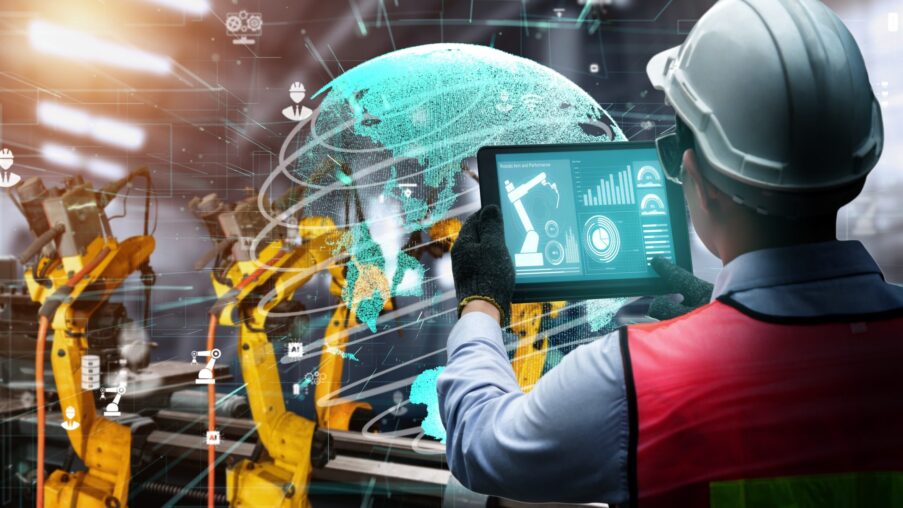
Predictive maintenance, powered by AI, introduces a smarter alternative. By continuously monitoring machinery through sensors, IoT devices, and real-time data streams, AI algorithms can detect subtle signs of wear, inefficiency, or malfunction long before a breakdown occurs. This allows organizations to schedule maintenance precisely when needed, optimizing both cost and performance.
Why Custom AI Development Matters
No two industrial systems are identical. Equipment varies by manufacturer, usage, operating environment, and maintenance history. Generic AI solutions often fail to capture these nuances, resulting in inaccurate predictions or limited adaptability. That’s where custom AI development proves essential.
By tailoring machine learning models to an organization’s unique datasets, engineers can train algorithms that recognize specific failure patterns relevant to that system. For example, a custom AI model developed for a wind turbine will differ significantly from one designed for a factory conveyor system or a fleet of vehicles. These bespoke models leverage domain-specific parameters such as vibration levels, temperature fluctuations, pressure readings, or energy consumption trends to deliver accurate, context-aware insights.
Furthermore, customized AI systems can integrate seamlessly with existing enterprise software, such as ERP, MES, or SCADA platforms allowing maintenance teams to receive actionable alerts and recommendations in real time. This integration ensures that AI insights translate directly into operational improvements, not just theoretical analytics.
The Role of Data and Model Training
The foundation of any predictive maintenance system lies in data. Custom AI solutions rely on large volumes of historical and real-time data to train models capable of identifying anomalies and forecasting failures. Data pre-processing, feature engineering, and continuous model retraining are key to maintaining accuracy as conditions change over time.
With advanced techniques such as deep learning, reinforcement learning, and sensor fusion, these models can adapt dynamically, learning from new patterns and improving their predictive power. Over time, they become more reliable, reducing false alarms and refining maintenance schedules with remarkable precision.
Benefits Across Industries
Predictive maintenance is applicable across multiple sectors:
-
Manufacturing: Preventing equipment breakdowns, optimizing production lines, and improving safety.
-
Energy: Monitoring turbines, grids, and renewable energy systems for early fault detection.
-
Transportation: Tracking vehicle performance to minimize unexpected failures and improve fleet management.
-
Utilities: Managing pumps, compressors, and infrastructure with real-time health analytics.
In each of these domains, customized AI models empower organizations to shift from reactive management to predictive control ensuring operations remain efficient, safe, and sustainable.
Shaping the Future of Intelligent Maintenance
The future of maintenance is not just predictive but prescriptive where AI doesn’t just forecast failures but also recommends the best corrective actions automatically. As technologies like digital twins, edge computing, and autonomous systems mature, custom AI development will play an even more crucial role in bridging physical assets with intelligent digital ecosystems.
By combining advanced algorithms with industry-specific data, predictive maintenance becomes more than a cost-saving measure it becomes a strategic enabler of resilience, efficiency, and innovation. For organizations embracing this transformation, the ability to design AI that truly understands their systems is the key to unlocking smarter, safer, and more reliable operations.



 Written by
 Written by