 Written by
 When you land on a website, what’s the first thing that grabs your attention? It’s not the content or even the product it’s the design. A website’s design and development shape how people feel, interact, and ultimately decide whether to stay or leave.
The truth is, your website isn’t just a digital storefront; it’s the first handshake between your brand and your audience.
First Impressions Matter More Than You Think
People form an opinion about a website in just 0.05 seconds. That’s how fast design influences perception. A clean, professional, and well-structured layout makes visitors feel they can trust your brand, while a cluttered or outdated design drives them away instantly. Studies show that 75% of users judge a company’s credibility based on its website design alone.
Think about it, if your site looks unprofessional or takes too long to load, visitors assume your products or services might lack quality too.
That’s why investing in strong web design and proper development isn’t just about looks; it’s about building trust and confidence from the very first click.
User Experience: The Heart of Every Website
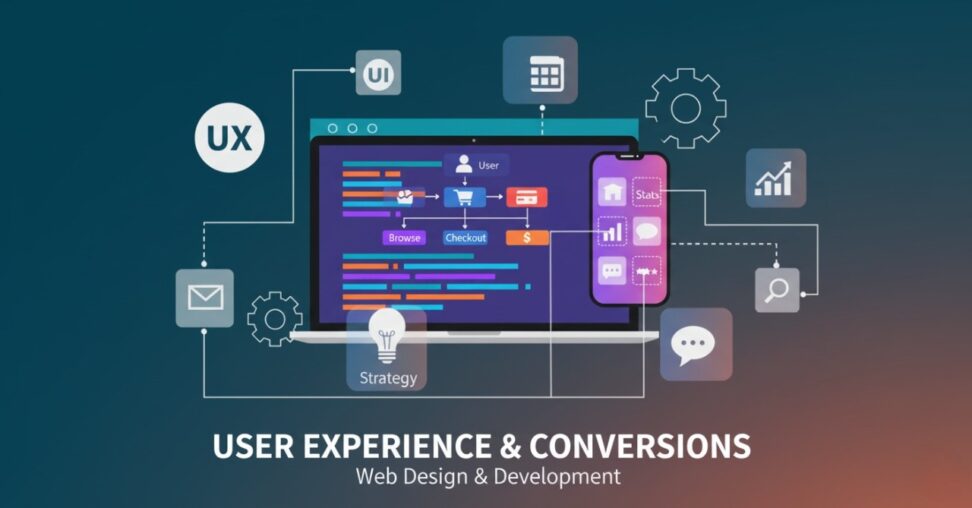
User experience (UX) is what keeps people coming back. A visually appealing site might grab attention, but it’s the smooth, intuitive experience that makes users stay longer and engage more. Every button, image, and piece of text should guide the visitor naturally toward what they’re looking for.
A well-designed UX helps people navigate easily without frustration. If users can’t find what they need within a few seconds, they leave, and 88% of users say they’re less likely to return after a bad experience.
Responsive design also plays a massive role here. Since most web traffic now comes from mobile devices, a website that looks perfect on desktop but breaks on mobile can instantly lose half its audience.
Good UX means faster load times, clear call-to-action buttons, readable fonts, and logical navigation, all of which work together to create a positive emotional connection with your brand.
How Design Impacts Conversions
Let’s face it, the goal of every business website is conversions. Whether it’s getting a sale, a sign-up, or a contact form submission, conversions depend heavily on how the site feels and functions.
A website that’s visually balanced and psychologically appealing encourages users to take action. For example, using the right color psychology can increase conversions by up to 24%.
Blue builds trust, red creates urgency, and green signals safety and growth. Even small design elements, like button size or placement, can make a huge difference.
It’s also important to reduce friction during the customer journey. If checkout pages are complicated or require too many steps, people abandon their carts. In fact, research shows that 70% of online shopping carts are abandoned because of poor design or lengthy checkout processes.
This is where many businesses turn to professional solutions like Online Boost to optimize their site design and credibility. Having a modern website isn’t enough; it needs to feel genuine, trustworthy, and conversion-driven.
The Role of Development in a Seamless Experience
Behind every great design lies powerful development. It’s what brings all the visuals and features to life. Fast-loading websites don’t happen by accident; they’re a result of optimized coding, image compression, and clean architecture.
Good development ensures that your website works consistently across all browsers and devices. It also improves your search engine visibility because Google prioritizes websites that load quickly and offer smooth usability.
A one-second delay in page load time can cause a 7% drop in conversions; imagine the impact that can have on your business revenue.
Security is another major part of development. A secure website not only protects data but also increases user trust. When people see that your site has SSL encryption and functions without glitches, they’re far more likely to complete a purchase or submit their information.
Trust, Reviews, and Web Presence
Even with great design and development, your website’s reputation plays a key role in conversions. Today’s users often check reviews before making a decision. Positive reviews add social proof, reinforcing that your brand is reliable and authentic.
Many businesses combine high-quality web design with reputation-building strategies such as buy google reviews to strengthen credibility.
While genuine reviews are always best, the goal is to ensure potential customers see consistent positive feedback. It builds confidence, enhances trust signals, and makes visitors more comfortable taking action on your site.
Balancing Aesthetics and Functionality
A perfect website is one where beauty meets purpose. Too much focus on visuals can slow down the site, while ignoring design for speed can make it feel lifeless. The key is balance.
A minimalist, user-centered design usually performs best. It helps visitors focus on what matters without distractions.
Pair that with solid technical performance, fast loading, responsive layouts, and clear CTAs, and you create a digital environment that converts visitors into loyal customers.
Final Thoughts
Web design and development are not just creative or technical tasks, they’re strategic tools that directly shape how users perceive and interact with your brand.
A strong design draws people in, smooth development keeps them engaged, and both together boost conversions.


 Written by
 Written by