 Written by
 In today’s data-driven world, businesses depend on a complex network of applications to manage sales, marketing, customer service, and operations. However, as organizations grow, so does the complexity of their digital ecosystems. Disconnected systems often lead to data silos, inconsistent information, and process inefficiencies that can slow down decision-making. This is where middleware steps in the invisible layer that brings structure, speed, and simplicity to enterprise integrations.
Middleware acts as a communication bridge between multiple applications, databases, and platforms. It ensures that data flows seamlessly across systems that otherwise would not interact. Whether it’s synchronizing customer information between a CRM and an ERP or connecting cloud-based and on-premises systems, middleware enables real-time data exchange without the need for manual intervention. In modern enterprises, it has become a cornerstone of digital transformation, allowing companies to integrate, automate, and scale efficiently.
When enterprises manage multiple CRMs or marketing automation platforms, middleware becomes even more critical. For instance, during a ZoomInfo to Salesforce integration, middleware tools facilitate the secure transfer of enriched customer data from one system to another in real time. Instead of relying on manual uploads or fragmented APIs, middleware provides a unified integration layer that ensures accuracy, reliability, and speed. This simplifies workflows for both IT teams and end users while maintaining data consistency across systems. As a result, organizations can align marketing and sales operations more effectively and gain a single source of truth for customer intelligence.
Understanding Middleware in Enterprise Integration
Middleware is often described as the “glue” that connects different software applications. It sits between systems, ensuring smooth communication and enabling complex business processes. Common types of middleware include message brokers, integration platforms as a service (iPaaS), enterprise service buses (ESBs), and API gateways. Each serves a unique purpose, but all share the same goal: seamless interoperability.
At its core, middleware abstracts the complexity of connecting applications. It allows systems with different architectures, data formats, or communication protocols to exchange information effortlessly. This is especially important for large organizations where legacy systems coexist with modern cloud applications. Instead of rebuilding or replacing existing infrastructure, middleware enables companies to modernize progressively through integration.
Why Middleware Matters in Today’s Enterprise Ecosystem
Enterprise environments are rarely uniform. They consist of diverse tools, CRM platforms, ERP systems, marketing automation software, data warehouses, and more. Without middleware, managing integrations between these systems would be overwhelming. Middleware provides several crucial benefits that simplify integration architecture and business operations.
1. Centralized Connectivity
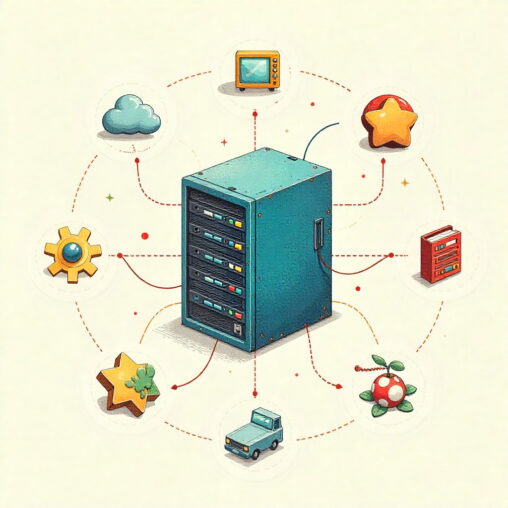
Rather than creating individual connections between each application, middleware provides a central integration hub. This eliminates the need for complex point-to-point integrations, which can be difficult to manage and scale. With middleware, organizations gain a structured and scalable framework that supports future system additions effortlessly.
2. Real-Time Data Exchange
One of the most significant advantages of middleware is its ability to process and deliver data in real time. This ensures that all departments, from sales and marketing to operations and finance, work with up-to-date information. Real-time integration leads to faster decision-making, improved collaboration, and enhanced customer experiences.
3. Simplified Maintenance and Scalability
Without middleware, maintaining integrations can become a technical burden. Every time a system updates or changes, IT teams must adjust multiple interfaces. Middleware reduces this complexity by managing communication centrally. It also supports horizontal scalability, allowing enterprises to add new applications and data sources as they grow.
4. Enhanced Security and Governance
Middleware plays a critical role in securing data exchanges between applications. Through encryption, authentication, and access control, it ensures that only authorized systems and users can access sensitive information. Additionally, middleware helps businesses comply with data protection regulations like GDPR by maintaining clear visibility and control over data flows.
The Role of Middleware in Streamlining Workflows
Modern middleware solutions go beyond basic data exchange; they enable intelligent automation and workflow orchestration. By connecting multiple systems through standardized APIs or connectors, middleware automates repetitive tasks such as data synchronization, lead assignment, and report generation.
For example, in a sales environment, middleware can automatically pull contact data from a marketing automation platform into a CRM. When a lead is updated or scored in one system, that change is instantly reflected in the other. This eliminates delays, prevents data duplication, and allows teams to act quickly on the most current information.
The integration layer also helps maintain consistency across platforms. If a company uses multiple CRMs or integrates third-party analytics tools, middleware ensures that every update or transaction follows defined business rules. This not only improves data accuracy but also simplifies compliance and audit processes.
Common Middleware Integration Use Cases
Middleware can be applied across a wide range of enterprise scenarios. Some of the most impactful use cases include:
-
CRM and ERP Integration: Connecting customer and financial data for end-to-end visibility into business operations.
-
Marketing Automation: Synchronizing campaign data across tools like Marketo, HubSpot, and Salesforce.
-
E-commerce and Inventory Management: Ensuring that product availability and order information remain consistent across online and back-end systems.
-
Data Warehousing: Consolidating information from multiple sources for analytics and reporting.
-
Customer Support: Integrating helpdesk tools with CRMs to provide agents with full customer histories during interactions.
Each of these examples demonstrates middleware’s ability to streamline data flow and unify enterprise systems without costly redevelopment.
Choosing the Right Middleware Solution
Selecting the right middleware platform depends on your organization’s size, infrastructure, and integration needs. Here are a few key considerations:
-
Compatibility: Ensure the middleware supports both your legacy and cloud applications.
-
Scalability: Choose a platform that can grow with your business as more systems are added.
-
Ease of Use: Look for low-code or no-code integration options that reduce dependency on IT teams.
-
Security: Verify that the platform provides robust data encryption, access control, and compliance features.
-
Support and Updates: Middleware vendors that offer continuous updates and technical support ensure long-term reliability.
Platforms like MuleSoft, Dell Boomi, and Workato have become popular due to their extensive integration libraries, strong security, and scalability. These tools are especially useful for companies that operate hybrid infrastructures with both on-premises and cloud systems.
Challenges in Middleware Implementation
Despite its advantages, implementing middleware requires careful planning. The most common challenges include:
-
Complex Data Mapping: Aligning data structures between different systems can be time-consuming.
-
Performance Bottlenecks: Poorly optimized middleware configurations can slow down integrations.
-
Change Management: Employees may need training to adapt to new automated workflows.
-
Cost Considerations: Licensing and setup costs vary by vendor and project complexity.
However, these challenges are often short-term and outweighed by the long-term benefits of increased agility, efficiency, and scalability.
The Future of Middleware in Enterprise Integration
As technology evolves, middleware is becoming more intelligent and adaptive. AI-driven middleware solutions can now predict integration failures, optimize routing, and even automate API generation. Additionally, the rise of low-code and event-driven architectures is democratizing integration, allowing business users, not just developers, to connect systems and automate workflows.
The future of enterprise integration will revolve around composable architectures, where middleware serves as the foundation for agile, modular, and data-centric systems. Organizations that embrace this evolution will enjoy faster innovation cycles and a competitive edge in an increasingly connected digital landscape.
Conclusion
Middleware has become the unsung hero of enterprise integrations. By providing a flexible and secure layer between disparate systems, it allows businesses to connect, automate, and scale without overhauling their entire infrastructure. From CRM and ERP synchronization to complex marketing data exchanges, middleware simplifies what was once a tangled web of integrations into a manageable, intelligent ecosystem.
Whether it’s handling a complex ZoomInfo to Salesforce integration or uniting multiple business applications under one digital roof, middleware empowers enterprises to work smarter, faster, and more collaboratively. In a world where data integration drives competitive advantage, middleware stands as the silent enabler of modern business success



 Written by
 Written by