 Written by
 High-risk industrial environments demand protection systems that go beyond standard construction. From oil and gas facilities to chemical plants and power stations, the ability to withstand both fire and explosive events is critical for safety and compliance. That is why many organizations turn to heavy-duty fire-resistant walls & ceilings, as well as engineered barriers, to reduce risks, safeguard assets, and ensure operational continuity.
Importance of Heavy Duty Fire Resistant Walls & Ceilings
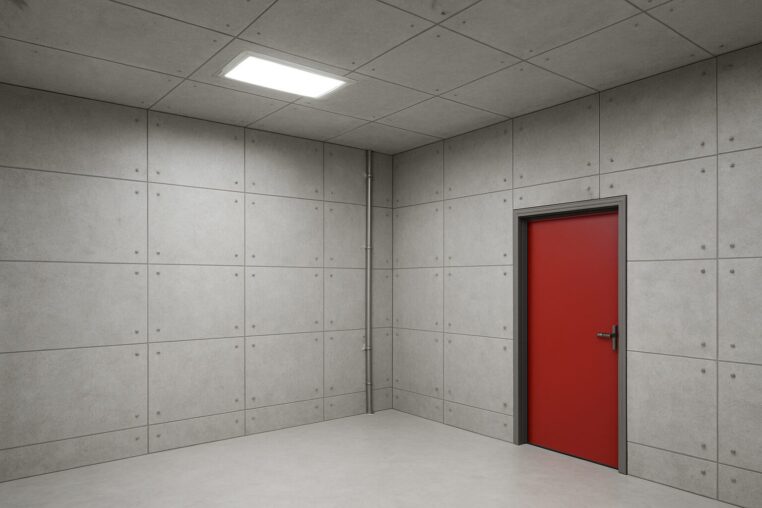
Unlike conventional partitions, heavy-duty fire-resistant walls & ceilings are engineered to endure extreme conditions. These walls are constructed from non-combustible materials that prevent the spread of flames while maintaining structural integrity during prolonged exposure to high heat.
They serve multiple functions:
- Compartmentalization: Isolating high-risk zones to prevent fire migration.
- Protection of critical equipment: Safeguarding turbines, generators, and electrical systems.
- Safety for personnel: Preserving escape routes and minimizing exposure to smoke and flames.
In industries where downtime translates to major financial losses, these walls are not only as a safety measure but also as a business safeguard.
Where Hydrocarbon Rated Fire Walls Are Critical
In sectors that deal with flammable fuels and chemicals, hydrocarbon-rated fire walls are indispensable. These walls are tested against hydrocarbon fire time-temperature curves, which simulate the rapid heat rise caused by petroleum-based fires.
They are widely applied in:
- Refineries: Protecting processing units and storage tanks.
- Petrochemical plants: Containing fire in reaction zones.
- Offshore platforms: Providing barriers between critical modules.
By implementing hydrocarbon-rated fire walls, organizations comply with industry codes while protecting both human life and high-value assets from catastrophic events.
Integration of Blast Walls and Blast Doors into Facility Design
Fire protection is only part of the equation in high-risk environments. Facilities must also defend against overpressure events caused by explosions. This is where engineered blast doors and blast walls become critical.
- Blast doors are designed to absorb and redistribute explosive forces, allowing safe access points without compromising structural integrity.
- Blast walls act as protective shields that prevent shockwaves from spreading throughout a facility.
Together, they provide a layered defence by integrating seamlessly with fire-rated assemblies. Incorporating both fire and blast protection systems into facility design ensures compliance with petrochemical, defence, and utility standards while creating a safer operating environment.
Balancing Fire Resistance with Structural Strength
One of the engineering challenges in protective construction is balancing thermal resistance with load capacity. Walls and ceilings must withstand not only the flames and high temperatures, but also mechanical stresses, vibrations, and potentially blast forces.
Solutions include:
- Reinforced cores that combine fireproofing with impact resistance.
- Modular panel systems that allow scalability and quick installation.
- Materials tested for both fire exposure and overpressure resistance.
This balance ensures that heavy-duty, fire-resistant walls & ceilings perform under multiple stress conditions, protecting infrastructure while maintaining operational reliability.
Conclusion – Future-Ready Fire and Blast Protection
As industrial hazards evolve, the need for advanced barriers becomes more urgent. Facilities cannot rely solely on traditional fire-rated assemblies; they must integrate blast and hydrocarbon-rated solutions into their safety frameworks to ensure comprehensive protection. By combining hydrocarbon-rated fire walls, durable ceiling systems, and engineered blast walls, organizations can construct facilities that can withstand fire, resist explosions, and maintain resilience for the future. Contact DuraSystems today!

 Written by