 Written by
 Choosing the right trailer is a critical decision that impacts everything from your budget and safety to your daily workflow and long-term asset protection. The choice between an Open Utility Trailer and an Enclosed Cargo Trailer comes down to balancing three key factors: Protection, Access, and Cost.
Both are essential workhorses, but they are designed for fundamentally different jobs. Here is a definitive comparison to help you select the ideal hauling solution for your needs.
🔒 The Enclosed Trailer: Security & Protection First
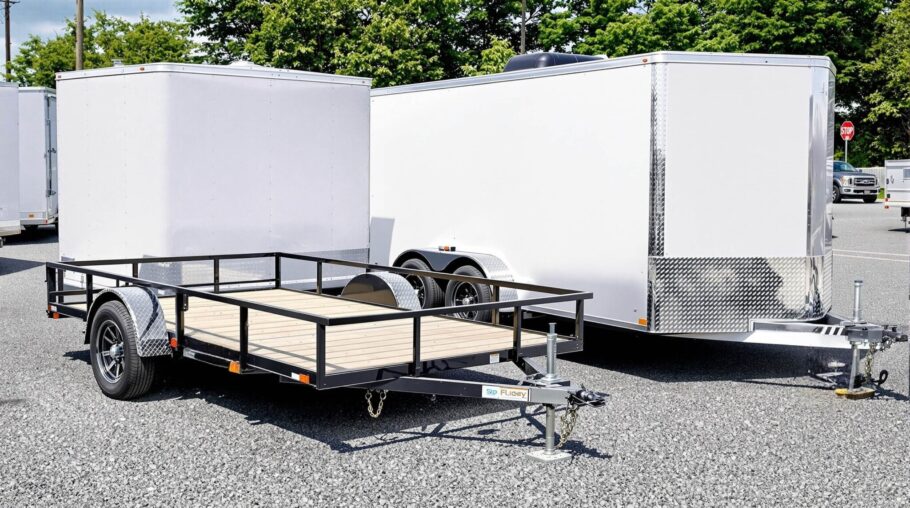
Enclosed trailers (also called cargo trailers) are essentially mobile storage units.1 They feature solid walls, a roof, and lockable doors, offering complete protection for the contents.
Pros of Enclosed Trailers
-
Maximum Security: The most significant advantage is the ability to lock your valuable tools, equipment, or inventory out of sight, protecting them from both theft and tampering.2
-
Total Weather Protection: Your cargo is completely shielded from rain, snow, road salt, dust, and damaging UV rays.3 This is critical for valuable items, sensitive materials, or electronics.
-
Mobile Workshop/Storage: They can be customized with interior shelving, lighting, workbenches, and climate control, effectively turning the trailer into a secure, portable extension of your workshop or office.4
-
Branding & Marketing: The flat, solid exterior walls are perfect for applying vinyl wraps, transforming your trailer into a mobile billboard for your business.5
Cons of Enclosed Trailers
-
Higher Upfront Cost: Due to the added material and complexity of the structure (walls, roof, doors, seals), an enclosed trailer is significantly more expensive than an open trailer of comparable size, often costing 30% to 50% more.6
-
Heavier Weight: The enclosed design adds considerable weight, demanding a more powerful towing vehicle and resulting in lower fuel efficiency for the tow rig.7
-
Limited Access: Loading and unloading is usually restricted to the rear door and sometimes a side door, which can be less efficient for bulky or oddly-shaped items.8
-
Towing Visibility: The large box structure restricts rear visibility, requiring more reliance on mirrors and making maneuvering and backing up more challenging.9
🏞️ The Open Utility Trailer: Affordability & Accessibility
Open utility trailers are simple, practical platforms with side rails and sometimes a mesh floor.10 Their design is focused on maximum flexibility and affordability.
Pros of Open Utility Trailers
-
Lowest Cost & Budget-Friendly: The streamlined, open design uses fewer materials and less labor, resulting in a much lower initial purchase price.11 This makes them ideal for budget-conscious buyers or occasional users.
-
Lighter Weight & Fuel Efficiency: Their simple construction makes them substantially lighter, putting less strain on the tow vehicle and improving overall fuel economy.12 They can often be towed by mid-size trucks or SUVs.
-
Ultimate Access & Versatility: Cargo can be loaded and unloaded from all sides. This is ideal for oversized, tall, or bulky items (like tall machinery, trees, or long lumber) that would not fit within the constraints of an enclosed space.
-
Lower Maintenance: With no roof to leak, no doors to align, and fewer components, maintenance is simpler, typically limited to checking the frame, tires, and bearings.13
Cons of Open Utility Trailers
-
Zero Protection: All cargo is fully exposed to the elements (rain, sun, road dust, and salt).14 Sensitive materials will require tarps and careful securing.
-
Security Risk: Tools and equipment are visible and easily accessible, making them highly vulnerable to theft or unauthorized access when the trailer is left unattended.15
-
Securing the Load: All items, large and small, must be diligently secured with straps, chains, or netting to prevent them from shifting or falling out during transit.
🧐 The Critical Decision Factors: Which Workhorse is Right For You?
The best trailer is the one that aligns most closely with your primary usage. Use the questions below to guide your choice:
| Decision Factor | Go ENCLOSED If… (Protection Wins) | Go OPEN If… (Access & Value Wins) |
| Cargo Type | You haul valuable tools, electronics, furniture, classic cars, or anything sensitive to weather. | You haul rugged items like landscaping equipment, lumber, debris, rock, or ATVs. |
| Security Needs | You need to leave equipment stored overnight on a job site or transport high-value inventory. | You primarily use the trailer for quick local hauls and store it securely at home/work. |
| Towing Vehicle | You own a powerful truck (heavy-duty pickup or larger) that can handle the increased weight. | You need to tow with a lighter-duty truck or SUV and prioritize fuel efficiency. |
| Budget | You view the trailer as a long-term investment in asset protection and brand building. | You need the most affordable option for simple, occasional hauling tasks. |
| Workflow | Your trailer must function as a mobile workspace or requires extensive organization with shelving. | You need to load and unload quickly from multiple sides or use a forklift/skid steer. |
Final Verdict
-
For the Professional Contractor, Tradesperson, or Mobile Business: The Enclosed Trailer is the superior workhorse. The added security and professional branding opportunities often offset the higher initial cost by preventing loss and driving business.
-
For the Homeowner, Landscaper, or Recreational User: The Open Utility Trailer offers unbeatable versatility and value. It handles yard waste, lumber runs, and moving bulky equipment with maximum efficiency and minimal expense.

 Written by
 Written by