Written by
 Automating Bonnell spring production is no longer a luxury — it has become a necessity for mattress and furniture factories aiming for higher output, stable quality, and lower labor dependency. Modern automation technology makes it possible to replace time-consuming manual processes with a fully synchronized production flow that handles coiling, knotting, heat treatment, and assembly with exceptional accuracy.
For manufacturers seeking the simplest and most effective upgrade path, a fully integrated bonnell spring machine offers the most direct route to reliable automation. Instead of combining separate machines from different vendors, a unified system ensures faster setup, easier maintenance, and more consistent performance.
Why Automation Has Become the Industry Standard
Bonnell spring production relies heavily on precision. Small deviations in wire tension, spring height, or knotting position can result in unstable mattress cores. A modern automatic bonnell spring machine eliminates these inconsistencies by relying on full-servo control for key movements such as wire feeding, forming, cutting, and lifting. With parameters stored digitally, operators can switch between different mattress specifications without mechanical adjustments.
More importantly, automation significantly reduces downtime. Automated lubrication, smart sensors, and real-time fault detection systems help prevent problems such as spring jams, tension loss, and misfeeds before they escalate into production stoppages.
How a Fully Integrated System Simplifies the Process
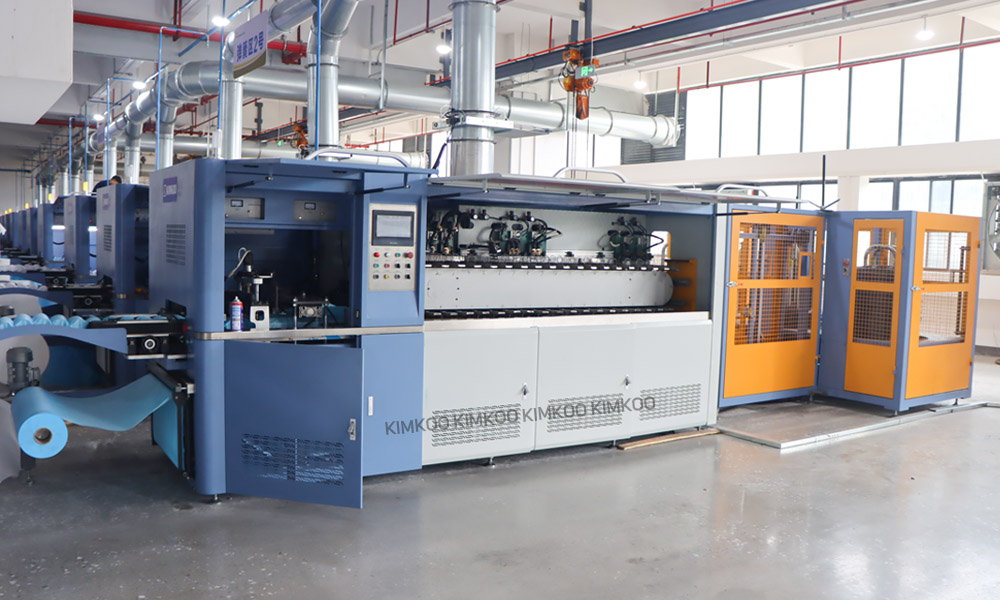
The core of a smooth production line lies in the integration of coiling and assembly. Instead of treating these processes as separate operations, a unified bonnell spring making machine performs both with a synchronized workflow.
- CNC-controlled coiling ensures the correct spring height, waist diameter, and turns.
- Servo-driven knotting produces consistent knot quality without frequent tune-ups.
- Electric heat treatment strengthens coil durability and long-term elasticity.
- Six-axis spring transfer keeps each spring aligned with tight tolerances.
- Automatic row pushing ensures each row enters the assembly section cleanly and accurately.
When combined, these features create a production flow that requires minimal human intervention while maintaining high output — typically up to 90 springs per minute.
What Makes the Process Truly “Easy”?
Manufacturers often assume automation means complicated controls or difficult installation. In reality, modern systems are designed to be intuitive. Dual touchscreens, multilingual interfaces, and PLC-based buttons give operators full control over settings without advanced training.
Furthermore, a fully integrated bonnell spring assembly machine educes factory layout complexity. With fewer standalone units, the factory gains:
- shorter material flow paths,
- cleaner production zones,
- faster troubleshooting,
- lower maintenance requirements.
The result is an automation system that not only boosts productivity but also makes day-to-day operations easier for your team.
A Simple Path Toward Higher Production
Upgrading to a fully automated solution is the most straightforward way to improve mattress output, reduce waste, and ensure long-term production consistency. With servo technology, real-time monitoring, and integrated assembly functions, manufacturers can achieve a faster return on investment while meeting the growing demand for high-quality Bonnell spring mattresses.
If your factory wants to modernize without adding complexity, a unified automation solution is the easiest and most effective path forward.