 Written by
 Zepbound (tirzepatide) has become a breakthrough in chronic weight management, offering significant results for those struggling with obesity. However, as with any powerful medication, users often encounter side effects as their bodies adjust. While gastrointestinal issues like nausea are well-known, many patients are surprised to experience body aches and muscle discomfort.
If you are experiencing soreness while on Zepbound, you are not alone. Understanding why these aches happen and how to manage them can help you stay on track with your weight loss goals.
Why Does Zepbound Cause Body Aches?
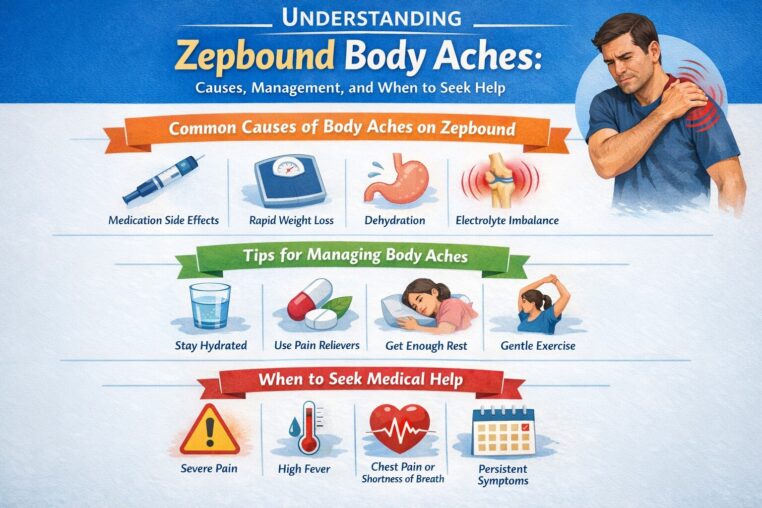
Body aches are a recognized, though less discussed, side effect of GLP-1 and GIP receptor agonists like Zepbound. Several factors may contribute to this discomfort:
-
Tissue Swelling and Inflammation: Localized swelling at the injection site can sometimes radiate, causing general muscle soreness.
-
Rapid Weight Loss: As the body loses weight quickly, physical composition changes. Muscles may feel fatigued or achy as they adapt to a new metabolic state and shifting weight distribution.
-
Dehydration: Zepbound can suppress thirst along with hunger. Dehydration is a leading cause of muscle cramps and general body aches.
-
Nutritional Gaps: Severe appetite suppression may lead to inadequate intake of essential minerals like magnesium, potassium, and calcium, which are vital for muscle function.
How to Manage the Discomfort
In most cases, Zepbound-related body aches are temporary and occur most frequently during the first few weeks of treatment or after a dose increase. Here are five strategies to find relief:
-
Prioritize Hydration: Aim for 8 to 10 glasses of water daily. Adding electrolytes to your water can help prevent muscle cramping and fatigue.
-
Focus on Nutrient Density: Even if you aren’t hungry, ensure you are consuming enough protein and essential vitamins to support muscle health.
-
Gentle Movement: While heavy lifting might feel difficult, gentle stretching, yoga, or walking can improve circulation and alleviate tension.
-
Over-the-Counter Relief: After consulting your doctor, medications like acetaminophen (Tylenol) can be effective for managing mild aches.
-
Rest and Recovery: Ensure you are getting adequate sleep, as your body does its most significant metabolic “work” and tissue repair while you rest.
When Body Aches Signal a Serious Problem
While mild soreness is common, certain symptoms indicate a more serious complication that requires immediate medical attention:
-
Rhabdomyolysis: This is a rare but severe condition involving muscle breakdown. If you experience extreme muscle pain, profound weakness, and dark-colored (tea-like) urine, seek emergency care immediately.
-
Pancreatitis: Severe abdominal pain that radiates to your back, accompanied by persistent vomiting, may indicate inflammation of the pancreas.
-
Systemic Symptoms: If body aches occur alongside a high fever, chills, or significant swelling, contact your healthcare provider.
The Bottom Line
Body aches on Zepbound are typically a transient part of the “adjustment phase.” Most patients find that the discomfort subsides within 2 to 3 weeks as the body acclimates to the medication. By staying hydrated and maintaining open communication with your doctor, you can navigate these side effects safely and continue your journey toward better health.


 Written by
 Written by