 Written by
 In the last few years, A2 cow ghee has moved from being a niche wellness product to a staple in conscious Indian kitchens. But with rising demand comes confusion. Every label claims to be “pure,” “desi,” and “traditional.” Yet, not all A2 ghee is created equal.
At Vashishti, we often meet customers who ask a simple but important question:
“Which is the best A2 cow ghee in India, and how do I know I’m buying the real thing?”
This blog answers that question clearly without hype, jargon, or half-truths.
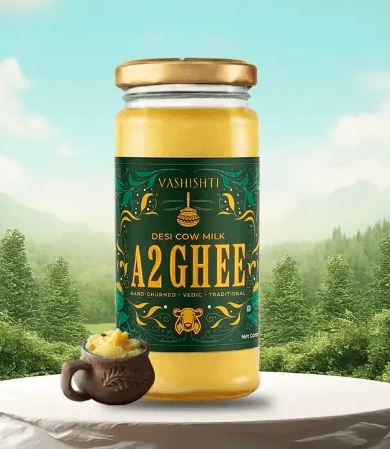
Understanding A2 Cow Ghee Beyond the Label
Let’s begin with clarity.
A2 cow ghee is made from milk of indigenous Indian cow breeds that naturally produce the A2 beta-casein protein. This is different from most hybrid or foreign cows, which produce A1 protein.
But here’s the industry truth:
A2 milk alone does not guarantee high-quality A2 ghee.
The real difference lies in:
- How the cows are raised
- How the milk is cultured
- How the ghee is prepared
A Real-World Example from the Dairy Industry
A few years ago, a family-run dairy in rural India shared an interesting story. They had pure desi cows, followed ethical practices, and made ghee traditionally. But their product failed initial quality tests not because of adulteration, but because the bilona process was rushed to meet demand.
The lesson was simple:
Tradition cannot be scaled without care.
The best A2 cow ghee in India today comes from producers who balance:
- Traditional wisdom
- Controlled, small-batch production
- Modern quality checks
This philosophy is what brands like Vashishti are built on.
What Makes the Best A2 Cow Ghee in India?
Here’s a practical checklist that industry experts actually use.
1. Indigenous Cow Breeds Matter
Authentic A2 ghee comes from Indian breeds such as Gir, Sahiwal, Tharparkar, or Red Sindhi. These cows produce milk that’s naturally rich in nutrients and easier to digest.
2. The Bilona Method Is Non-Negotiable
The traditional bilona method involves:
- Culturing fresh milk into curd
- Hand-churning curd to extract makkhan (butter)
- Slow-cooking the butter on low flame
This process preserves:
- Fat-soluble vitamins (A, D, E, K)
- Natural aroma and grainy texture
- Digestibility and medicinal value
Fast cream-based methods may look efficient, but they compromise quality.
3. Cow Welfare Directly Impacts Ghee Quality
Cows that graze freely, eat natural fodder, and are not injected with hormones produce milk with better fat composition.
High-quality A2 ghee always begins with stress-free cows.
4. Aroma, Texture, and Taste Tell the Truth
Pure A2 cow ghee:
- Has a naturally grainy texture (danedar)
- Melts easily at body temperature
- Carries a mild, nutty aroma—not a burnt or flat smell
These are signs you cannot fake consistently.
Why Many People Switch to A2 Cow Ghee
From urban professionals to elderly households, the shift toward A2 ghee is driven by lived experience, not trends.
Common reasons include:
- Better digestion compared to regular ghee
- Improved gut comfort
- Feeling lighter even with daily consumption
- Trust in traditional food wisdom
Many families now treat A2 ghee not as a luxury, but as preventive nutrition.
How Vashishti Approaches A2 Cow Ghee Differently
At Vashishti, the focus is not mass production—it’s consistency and integrity.
The approach includes:
- Sourcing milk only from indigenous cows
- Following the bilona method without shortcuts
- Producing ghee in small batches
- Prioritizing purity over shelf appeal
This ensures that every jar reflects what A2 ghee is meant to be—not just what the market expects.
Common Mistakes Buyers Make (and How to Avoid Them)
Mistake 1: Trusting low prices
Real A2 ghee cannot be cheap. The process, yield, and care involved simply don’t allow it.
Mistake 2: Ignoring process details
If a brand can’t clearly explain how their ghee is made, that’s a red flag.
Mistake 3: Assuming all “desi ghee” is A2
Desi ghee and A2 ghee are not the same. Always verify cow breed and method.
FAQs: Best A2 Cow Ghee in India
Is A2 cow ghee suitable for daily use?
Yes. In moderation, A2 ghee supports digestion, energy, and overall wellness.
Can A2 cow ghee be used for cooking?
Of course, it is stable at very high temperatures and perfect for Indian cooking: sautés and temperings.
How is A2 ghee stored?
Store it in a cool, dry place. If pure and prepared properly, no refrigeration is required.
How much A2 ghee should one consume daily?
The daily requirement for most adults is 1–2 teaspoons, depending on diet and lifestyle.
Conclusion: Choosing Quality Over Claims
The best ghee for an A2 cow in India is less about the packaging and more about informed decisions. The moment a person truly understands the process and the tradition that goes with ghee, also weighing in the decision with ethics of purchase-the product isn’t so hard to recognize anymore.
Brands like Vashishti stand for a simple belief:
Real food doesn’t need exaggeration—it needs honesty. If you’re investing in A2 cow ghee, invest in something that nourishes your body the way Indian wisdom intended.


 Written by
 Written by