 Written by
 As we navigate 2026, the global mattress industry faces a dual challenge: rising material costs and an increasingly scarce skilled labor pool. Traditional factories that rely on manual spring handling are finding it nearly impossible to maintain consistent profit margins. The solution that leading manufacturers are adopting is not just “more machines,” but rather “smarter integration.”
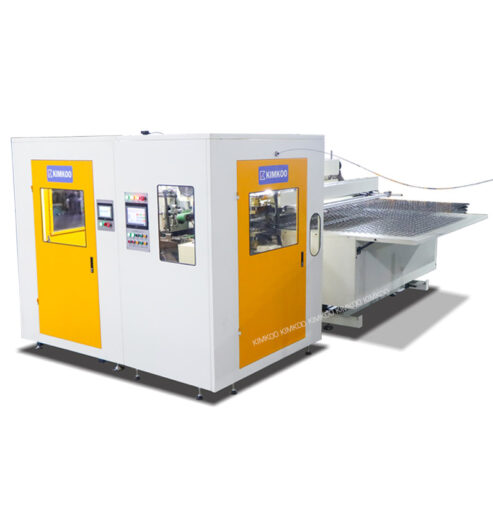
The transition to a high-efficiency production floor begins with eliminating manual touchpoints between wire coiling and unit assembly. By deploying an advanced bonnell spring coiling machine, factories can reduce their direct labor requirements by up to 60%. This shift allows skilled workers to move from repetitive, physically demanding tasks to high-value supervisory roles, significantly improving employee retention and plant safety.
The Impact of “Zero-Touch” Manufacturing
In a traditional setup, individual springs are often moved, stored, or manually aligned before they reach the assembly stage. This creates “hidden waste”—small delays and minor damages that aggregate into major losses. A modern bonnell spring machine solves this by combining five critical processes: coiling, knotting, heat treatment, alignment, and final assembly into one continuous flow.

This “Zero-Touch” philosophy ensures that the wire is never compromised by human handling. Integrated servo-driven manipulators handle the transfer with sub-millimeter precision, while real-time sensors monitor every step of the process. If a wire misfeeds or a jam occurs, the system triggers an immediate alarm, preventing the “cascading errors” that often plague manual production lines.
Precision Assembly: Beyond Throughput
While speed is essential, the structural integrity of the mattress unit is what defines a brand’s reputation. Automated assembly eliminates the “human factor” in stringing and knotting. Using a specialized bonnell spring assembly machine, manufacturers can achieve a perfectly square unit with a diagonal deviation of less than 1 cm. This accuracy is vital for high-end hospitality contracts where consistency across thousands of units is a non-negotiable requirement.
Modern assembly units also feature magnetic steering systems that provide 45° rotation for perfect alignment. This ensures that every helical wire is inserted correctly, reducing the risk of “spring click” or internal friction that shortens the lifespan of the mattress.
Adaptive Production for Modern Trends
As consumer preferences shift toward varied firmness levels and specialized sofa designs, the ability to switch production parameters quickly is a competitive necessity. Current automated systems offer CNC-adjustable settings for:
- Spring Count & Layout: Digital control over rows and columns for custom sizes.
- Wire Versatility: High-capacity 1000kg frames to support long, uninterrupted runs.
- Variable Specs: Quick adjustment of spring height (80mm to 230mm) via the touchscreen interface.
Building a Sustainable Future
The manufacturing landscape is evolving from labor-intensive to tech-driven. Companies that invest in end-to-end automation today are the ones that will dominate the market in the coming decade. High-precision machinery does more than just make springs—it builds a reliable, scalable foundation for business growth.
About KIMKOO
Since 2008, KIMKOO Mattress Machinery has empowered manufacturers in over 30 countries with cutting-edge technology. As a specialized mattress machine developer, we focus on engineering solutions that minimize downtime and maximize output. Our proprietary technology and 17 years of industry expertise ensure that your production line remains as resilient and efficient as the springs it produces.

 Written by