 Written by
 Handcrafted guitars stand as testaments to human ingenuity, where every curve and joint whispers a story of patience and precision. Unlike mass-produced instruments churned out by machines, these guitars emerge from the hands of master luthiers who spend weeks, sometimes months, coaxing life into slabs of wood. The process begins with selecting tonewoods—spruce for vibrant tops, mahogany for warm resonance—each piece inspected for its hidden voice. This intimate craft isn’t just about building a guitar; it’s about sculpting an acoustic soul that sings differently for every player, capturing nuances that factory models can only dream of mimicking.
Selecting Woods with an Ear to the Future
The heart of a handcrafted guitar’s sound starts in the forest, where luthiers hunt for woods that resonate like old friends. A quarter-sawn Sitka spruce top might vibrate with crystalline highs, while Brazilian rosewood sides add a smoky depth that ebony can’t touch. These choices aren’t random; luthiers tap, flex, and weigh each board, listening for the subtle “tap tone” that predicts how it’ll hum under strings. This foresight ensures the guitar’s unique identity—perhaps a bright twang for folk strumming or a buttery sustain for blues bends—setting it apart from the uniform timbre of automated builds.
The Sculptor’s Touch in Shaping the Body
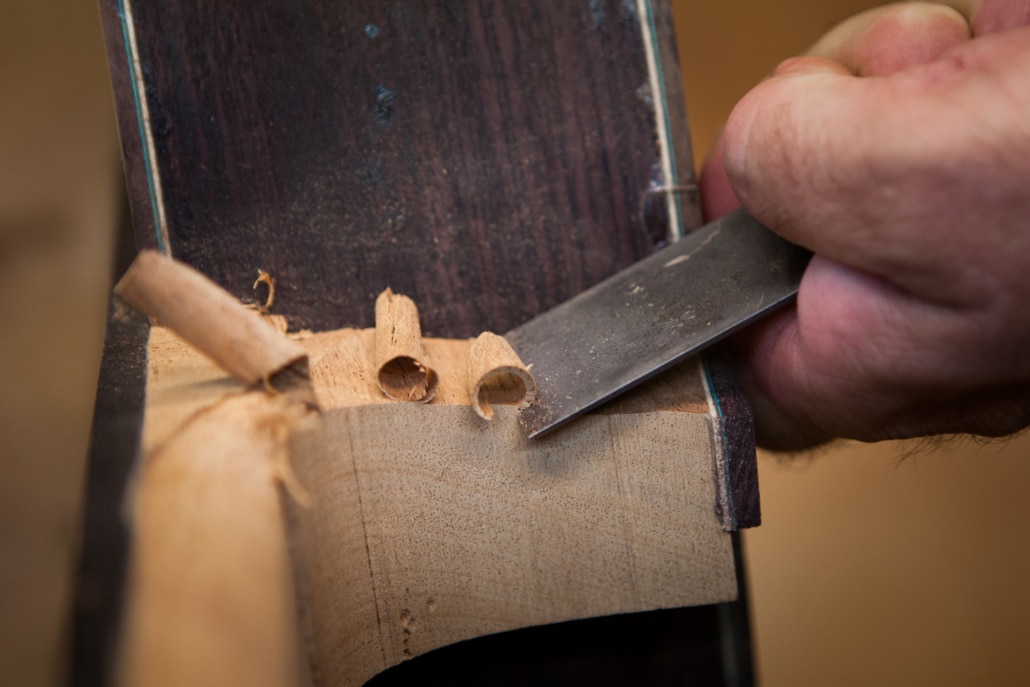
Shaping the guitar body is where raw wood meets artistry, a dance of chisels, planes, and sandpaper that births its ergonomic grace. Luthiers carve braces beneath the top like delicate ribs, thinning them to exact grain lines so vibrations flow freely without warping. A dreadnought’s bold flanks demand bold cuts, while a parlor guitar’s intimacy calls for gentler contours. This hands-on sculpting imprints the instrument with quirks—a slight asymmetry here, a refined waist there—that amplify its acoustic fingerprint, making each note feel personal and alive.
Neck and Fretboard: The Soul of Playability
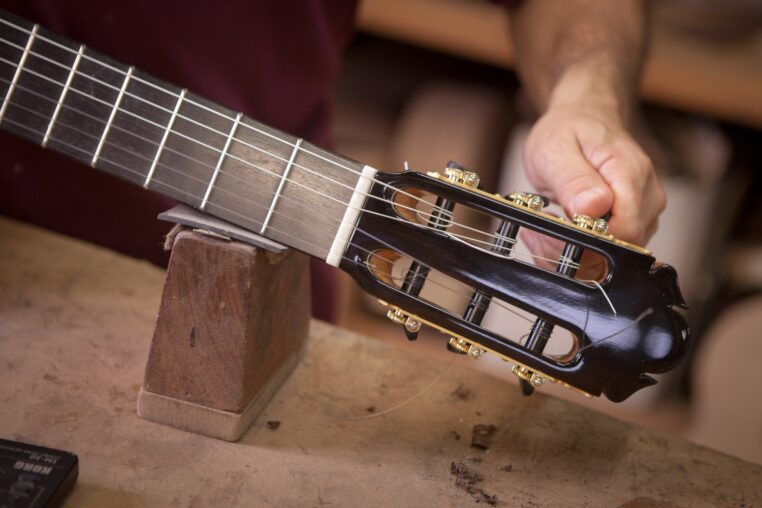
Crafting the neck demands a surgeon’s steady hand, as it’s the bridge between player and sound. Maple or quartersawn mahogany gets rough-hewn, then steamed and bent into a gentle curve, with ebony or rosewood fretboards inlaid for silky speed. Frets are hand-hammered, each one burnished to perfection, ensuring buzz-free action that sings across the fretboard. This meticulous work infuses the guitar with responsive playability, where bends and slides reveal tonal colors unique to its geometry, far beyond the standardized feel of production lines.
Voice from Within: The Art of Voicing
Voicing is the luthier’s secret alchemy, tuning the guitar’s innards like a composer fine-tuning an orchestra. They graduate the top’s thickness—thinner at the edges for sparkle, thicker centrally for power—then tap and tweak braces until the whole ensemble breathes in harmony. A skilled ear discerns overtones: too boomy, and they shave; too brittle, they add mass. This step births the guitar’s acoustic identity, a bespoke spectrum of harmonics that might favor growling lows or shimmering highs, ensuring no two handcrafted axes sound alike.
Bridge and Saddle: Gateways to Tone
The bridge acts as the tone’s conductor, channeling string vibrations into the wood’s eager grain. Luthiers mill it from hardy maple or rosewood, slotting a bone saddle—often hand-shaped from fossilized ivory—for unyielding energy transfer. Intonation gets dialed in by ear, with subtle saddle sanding to sweeten each fret. This precision crafts the guitar’s sustain and attack, lending a unique “bloom” to chords or a pinpoint clarity to leads, qualities that mass production often sands away in pursuit of efficiency.
Finishing Touches That Breathe Life
A handcrafted guitar’s finish isn’t mere gloss; it’s a breathable skin that lets the wood sing. Luthiers apply thin shellac or oil layers by hand, French polishing for a mirror sheen that ages into patina. No sprayed plastics here—these finishes amplify resonance, unlike thick factory lacquers that deaden vibes. Buffed to luminosity, the guitar gleams with personality, its surface subtly influencing tone through micro-vibrations, cementing its distinct acoustic character.
Why Handcrafted Guitars Echo Uniquely
In the end, handcrafted guitars own their acoustic identity because every decision—from wood’s vein to the final polish—carries the luthier’s fingerprint. They age like fine wine, opening up with play to reveal evolving tones: a new guitar’s tightness mellows into golden warmth. Players swear by this magic—think of legends like a ’42 Martin D-28’s haunting moan—proving that in a world of clones, these instruments pulse with irreplaceable soul, inviting you to discover your own voice within their strings.



 Written by
 Written by