 Written by
 Accurate patient weight measurement is a critical aspect of healthcare. It informs medication dosages, monitors fluid balance, tracks nutrition progress, and helps with overall clinical assessments. For patients with limited mobility or those who rely on wheelchairs, conventional weighing scales are often impractical. This is where weighing chairs and wheelchair scales come into play.
Both devices are designed to accommodate patients who cannot stand unassisted, but choosing the right solution for your healthcare facility requires understanding their features, benefits, and limitations.
Why Accurate Weight Measurement Matters in Healthcare
Weight measurement in a clinical setting isn’t just about numbers. It plays a vital role in:
- Determining medication dosage accurately
- Monitoring hydration and nutrition
- Tracking disease progression or recovery
- Supporting mobility and rehabilitation plans
- Enhancing patient safety
For patients with mobility challenges, a device that accommodates wheelchairs or provides safe seating is essential. Both weighing chairs and wheelchair scales aim to meet these needs, but they serve slightly different patient populations and clinical purposes.
What Is a Weighing Chair?
A weighing chair is a specially designed chair equipped with integrated scales. Patients sit comfortably in the chair, and their weight is measured without needing to stand.
Key Features of Weighing Chairs
- Built-in weighing system within the chair
- Safety armrests and footrests for patient support
- Digital display for immediate readings
- Optional wheels for easy movement within the facility
- Some models include height measurement attachments
Benefits of Weighing Chairs
- Patient Comfort and Safety: Patients can be weighed while seated, reducing the risk of falls or strain.
- Versatility: Suitable for elderly patients, those with balance issues, or patients who cannot transfer to a traditional scale.
- Accurate Weight Readings: Modern models provide precise measurements, often to 0.1 kg.
- Compact Design: Easier to store in limited clinical spaces compared to larger wheelchair scales.
Limitations
- Limited mobility: Typically requires patients to transfer from a wheelchair to the chair, unless the chair has wheels.
- May not accommodate larger or heavier patients depending on the model’s maximum capacity.
- Usually designed for indoor use only.
What Is a Wheelchair Scale?
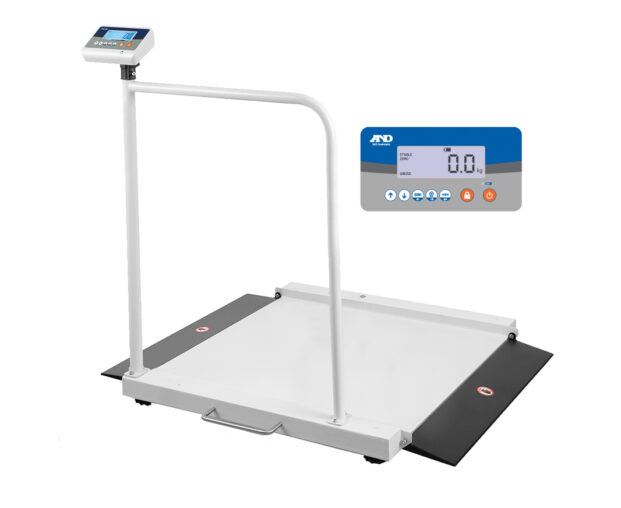
A wheelchair scale allows patients to remain in their wheelchair while being weighed. The scale platform is designed to accommodate standard wheelchairs safely and accurately.
Key Features of Wheelchair Scales
- Low-profile ramps or platforms for easy wheelchair access
- High weight capacities to accommodate various wheelchairs and patient sizes
- Digital displays with tare functionality to subtract wheelchair weight
- Some models offer portability for multi-room use
- Durable design for heavy-duty hospital environments
Benefits of Wheelchair Scales
- No Transfer Required: Ideal for patients who cannot safely move from wheelchair to chair.
- High Capacity: Can accommodate heavier patients and larger wheelchair models.
- Ease of Use: Reduces staff effort and risk of injury during patient weighing.
- Versatile Applications: Suitable for hospitals, rehabilitation centres, aged care facilities, and outpatient clinics.
Limitations
- Larger footprint: Wheelchair scales require more floor space than weighing chairs.
- Less compact for storage: They may not fit easily in smaller clinics.
- Higher upfront cost: Some models are more expensive than standard weighing chairs.
Comparing Weighing Chairs and Wheelchair Scales
To decide which device is right for your facility, consider the following factors:
| Feature | Weighing Chair | Wheelchair Scale |
| Patient Mobility Required | Some transfer required | Patients can remain in wheelchair |
| Safety Features | Armrests, footrests | Low ramps, anti-slip surface |
| Weight Capacity | Moderate | High, supports larger wheelchairs and patients |
| Space Requirements | Compact | Larger footprint |
| Portability | Often lightweight and mobile | Some portable models, mostly stationary |
| Ease of Use | Simple for seated patients | Easy for wheelchair-bound patients |
| Maintenance | Moderate | Low to moderate, depends on model |
| Ideal For | Rehabilitation units, clinics, small care facilities | Hospitals, aged care, high-volume wheelchair users |
Clinical Considerations for Choosing the Right Option
- Patient Population
- If your facility has patients who can transfer safely from wheelchair to chair, a weighing chair may be sufficient.
- For facilities with patients who cannot transfer, or with heavier wheelchair users, a wheelchair scale is the safer and more practical choice.
- Space Constraints
- Clinics with limited room may prefer compact weighing chairs.
- Larger hospitals with dedicated weighing areas can accommodate wheelchair scales.
- Staff Workflow
- Weighing chairs may require more staff assistance for transfers.
- Wheelchair scales can streamline workflow, reducing staff fatigue and risk of injury.
- Frequency of Use
- Facilities with frequent patient weighing may benefit from wheelchair scales due to speed and convenience.
- Weighing chairs are suitable for lower-volume or specialised use cases.
- Budget
- Weighing chairs are generally more affordable upfront.
- Wheelchair scales can be a larger initial investment but may reduce indirect costs related to staff injury and transfer assistance.
Additional Features to Consider
Regardless of your choice, some modern weighing devices offer extra features that can enhance clinical utility:
- Integrated height measurement for BMI calculations
- Connectivity options: USB, Bluetooth, or networked systems to record patient data directly into EMRs
- Battery operation: Useful for mobile units or facilities with intermittent power
- Tare function: Essential for wheelchair scales to subtract wheelchair weight
Practical Recommendations for Healthcare Providers
- For Small Clinics or Rehabilitation Units: Weighing chairs are ideal due to their compact design and patient comfort.
- For Hospitals and Aged Care Facilities: Wheelchair scales are more practical for high-volume use, diverse patient sizes, and enhanced safety.
- For Facilities with Mixed Needs: Some institutions invest in both types, providing flexibility for different patient scenarios.
Conclusion
Choosing between a chair scale and a wheelchair scale depends on your patient population, space, workflow, and budget. Both devices are essential tools for accurate weight measurement in mobility-challenged patients, but each serves slightly different purposes:
- Weighing chairs are ideal for seated patients who can transfer safely, offering comfort and compact design.
- Wheelchair scales are perfect for patients who remain in their wheelchair, providing high capacity, convenience, and safety for staff and patients.
For healthcare providers in 2025, investing in the right equipment not only enhances patient care but also improves operational efficiency and workplace safety. By evaluating your facility’s unique requirements, you can select the weighing solution that ensures accuracy, safety, and long-term value.


 Written by
  Written by